
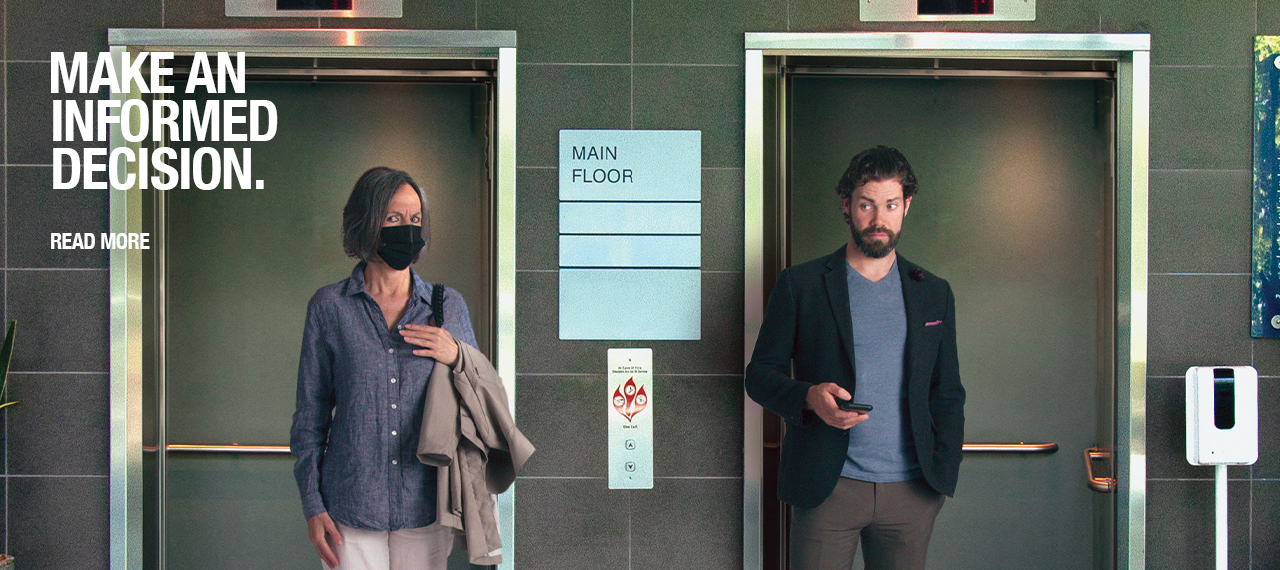
KEEP YOUR DISTANCE?
Do we return to the office if we’ve been working from home? Will we continue to visit friends and family once we are back indoors? Do we wear a mask, and if so when and where?
Summer offered a slight reprieve from COVID-19. We visited outdoors, safe in the knowledge the virus doesn’t spread easily in fresh air, particularly if we continue to practice social distancing.
We had a bit of breathing room to prepare for the choices and uncertainty that Fall would bring. And now Fall is here, and as we move back indoors, we have to make tough choices.
Living with chronic uncertainty and the hyper-vigilance required to keep yourself and others safe during COVID-19, takes focus and determination.
This level of focus is difficult to sustain for long periods of time. As a result, many people are experiencing anxiety from the constant worry and concern over the virus. Other people, exhausted with the constant hyper-vigilance, have returned to normal living, even as the threat of COVID-19 continues.
Living with uncertainty isn’t unique to COVID-19. Every day we wake up, never truly knowing what the day will bring. But in most situations, we have some frame of reference, some way of knowing what the risks and odds are of something going wrong.
Odds are that tomorrow will be as unremarkable as the day before. We focus on the odds and go about our business, usually without concern for any danger that may lurk around the corner.
If we focused constantly on what could go wrong, we would become so bogged down in uncertainty, that we couldn’t function. Imagine if you couldn’t assume that your house would still be standing when you returned home, or that the loved ones you said good-bye to this morning would still be alive at the end of the day.
The inability to make assumptions based on probability would make life unbearable. So instead of checking constantly that what was true yesterday is still true today, we play the odds. We focus not on what is possible, but on what is probable.
All of us have our own comfort zone with risk taking. Some of us are high risk takers, loving the adrenaline rush of beating the odds. Others are more cautious, not taking unnecessary risks.
What has thrown many of us for a loop, is that COVID-19 is a new risk, something we have no frame of reference for. We do not know how to accurately assess the odds, and our risky or cautious behaviour, has positive or negative effects on a wide-reaching scale.
As we navigate the threat of COVID-19, we all consider the odds of getting the virus if we lessen restrictions. We weigh in on our social responsibility to ourselves and others.
Unlike other risk-taking activities like sky-diving, mountain climbing, or heli-skiing, our choices around this virus impacts others. It falls into the category of speeding or driving drunk. Even more unique to COVID-19 is the potential for the large number of people your risk-taking can impact.
It can be frustrating to risk takers when others want to proceed more cautiously than themselves, just as it’s scary to cautious people to be pushed beyond their comfort zone. As you make decisions for yourself, your family, and your community during this pandemic, it may be helpful to evaluate your own risk-taking style.
If you are anxious by nature, you have a tendency to over-estimate the odds of something bad happening, believing that anything possible is probable. You may want to plan for every possible contingency and if you can’t have a 100 percent guarantee of a positive outcome, you may be afraid to move forward.
On the other hand, high-risk takers often under-estimate the risks presented by any given activity, assuming that if something isn’t guaranteed to happen, it won’t happen.
Many people are somewhere in the middle, accepting that risks and uncertainty as a part of life, but avoiding situations in which the consequences for risk taking are severe and there is an option for another course of action.
How we approach COVID-19 is as much a social responsibility challenge as it is a personal responsibility challenge.
Rather than relying on our individual risk-taking style to navigate us through these difficult times, it’s helpful to make informed decisions based on facts from reliable sources.
Information from experts may be at odds with your own risk-taking style. If navigating through COVID-19 is causing you distress, reach out to Walmsley, your EFAP provider. We continue to offer counselling services during the pandemic, either through safe distancing protocols, or through video or phone counselling.
Jenny DeReis, MC Psych, RCC