
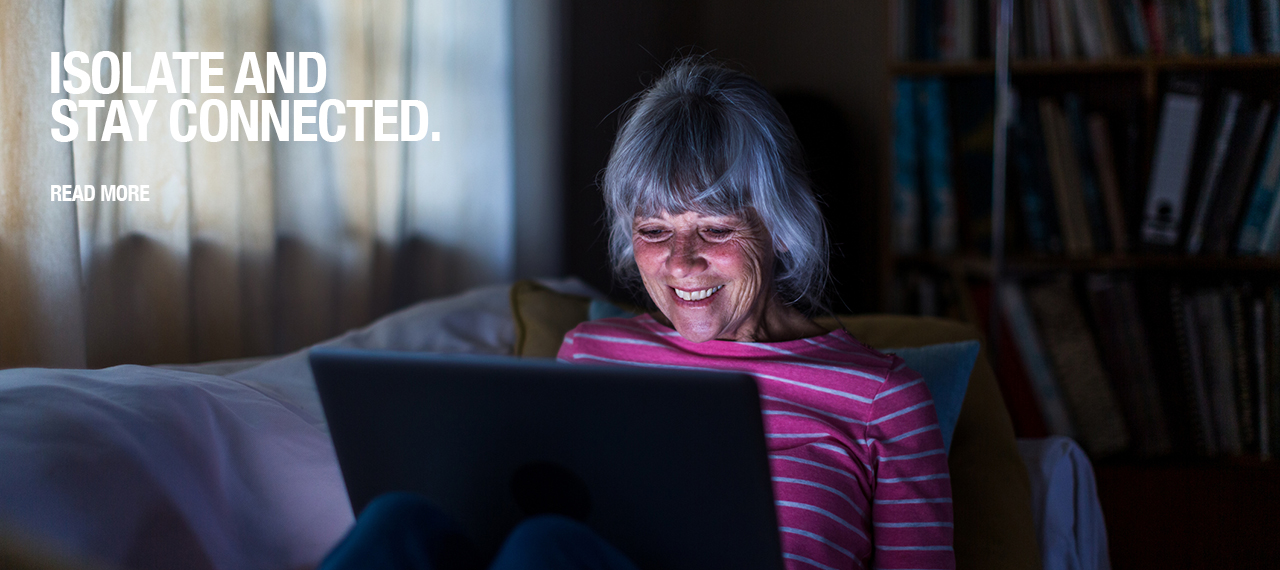
Video chat or talk on the phone regularly with friends and family.
An important part of protecting our mental health during the Coronavirus scare is to accept and label our emotional responses accurately. Fear is a normal response to a real threat. Anxiety is a fear of a situation that does not pose a real or imminent threat. The Coronavirus is real, and feeling fear and stress is a normal, healthy way to feel under the circumstances.
Fear sharpens our senses and prepares us for action. Without fear we wouldn’t take self-isolation, social distancing, hand-washing, and flu symptoms seriously. During this real threat, we need our fear to keep us vigilant and to propel us to make wise choices.
Two young adults were recently interviewed at a crowded beach in Florida. They expressed no fear of the virus and believed that everyone should continue life as normal. Their lack of fear is not helpful and will place them at greater risk of contracting the virus. We need healthy fear to guide us to make wise choices during these uncertain times.
Yes, fear is a normal reaction to the first pandemic many, if not all of us, have ever experienced. We fear our own health and those of people we love. In addition to fear for our physical well being, many of us fear losing our jobs and savings. We may also be grieving losses that the Coronavirus has brought. Many have had to cancel or postpone much-anticipated activities because of the situation.
Fear is a normal stress reaction, and it prepares us to meet the demands of the situation. When we experience fear we become more alert, our senses become more acute, and we physically prepare for a fight, flight or freeze response. However, if we stay in this fight, flight, or freeze state for extended periods of time, our mental and physical health suffers. Prolonged or intense fear or stress can inhibit our ability to cope.
It’s possible during a crisis to grow as we push ourselves to develop new coping skills to meet the increased demands. However, a crisis can also cause us to stop functioning effectively and to experience a deterioration in our mental health.
Some signs of stress are normal and expected. Initially, you may find yourself more irritable, less social, you may have difficulty sleeping or find you need to sleep more often. You may find your productivity and ability to concentrate decreases. These symptoms should settle down over the next week or two as your brain learns to adapt to the new situation. However, if these symptoms persist or worsen, and/or you experience any of the following, it may be time to reach out to your Employee and Family Assistance provider.
Strategies you can practice at home to help you reduce your stress level.
- Practice relaxation and mindfulness using YouTube videos or downloaded apps*
- Remind yourself that fear and stress are normal reactions and will likely subside naturally over time as you adjust and adapt.
- Get outside your head by finding ways to help others, make food or send an encouraging note to someone who’s isolating at home.
- Take up a hobby, read a good book, and find ways to enjoy this imposed time of less social activity,
- Exercise regularly and focus on improving your physical health.
Symptoms that may need professional intervention.
- Increasing irritability, anger, and a general sense of being unable to cope
- Increased fighting or a deterioration in communication with significant others
- Feelings of hopelessness and despair
- Increased alcohol or drug use
- Suicidal thoughts
Walmsley’s response to the Coronavirus.
Walmsley continues to provide counselling services to EFAP members. We understand that this situation significantly increases people’s fear and stress. However, we take your health and the health of our community seriously, and are implementing the policies and protocols recommended by the government.
We have switched to telephone, video and other web based services in order to rigorously support the effort to slow down the spread of the virus. We have offered this service for years for those in remote communities or for those who simply prefer the convenience of phone or video appointments. Many people have found it as effective as face-to-face therapy, so rest assured, the quality of the service will not decrease.
You may find it helpful to simply to talk to someone about your fears and concerns without worrying about increasing their stress. You may also benefit from learning skills and strategies to reduce and manage your concerns.
This is a stressful time for everyone and your fears are real. Still, you can manage your emotions so that your response is measured, appropriate, and helpful to yourself and those around you. Many people come through a crisis stronger than ever, with even more confidence in their ability to cope and manage difficult situations. Our job is to ensure that you get through this difficult time even more resilient than ever.
Helpful Resources. YouTube videos for stress reduction
- Mindfulness Meditation - Quick 15 Min Stress Relief Version
- Psychoactive Hypnosis for Depression and Times of Suffering - Nicolas Croll and Jill Langford
- Happiness and Inner Peace guided audio hypnosis meditation
- Tree Of Life Spoken Guided Meditation for Grounding relaxation with Theta Binaural Beats
- Calm Down Guided Meditation: A visualization to reduce stress with Jason Stephenson
- Guided Grounding Meditation Exercise - Grounding Techniques
Mindfulness apps.
- Calm
- Mindshifts (for teens)
- Headspace
- De-Stressify
We encourage you to practice compassion and self-compassion as we maneuver through these uncharted waters.
Jenny DeReis, MC Psych, CCC